Visa and consulate
US Visa Types Explained: B-1/B-2, F-1, H-1B and L-1
B-1/B-2 is for short business or tourist visits, F-1 is for academic students, H-1B is for specialty-occupation workers and L-1 is for staff transferring within the same company. Students and workers need paperwork from a school or employer first, while visitors apply directly with a DS-160.
What is the difference between B-1 and B-2?
B-1 is the business visitor visa and B-2 is the tourism, vacation and pleasure visa. Most travellers receive a combined B-1/B-2 visa. It is meant for temporary stays, for example attending a meeting, a conference, a family visit or a holiday. It is not a work visa and it is not a route to study.
No petition is needed in advance. You complete the online DS-160 form, pay the application fee, and book an interview at the nearest US embassy or consulate. The Department of State lists the visitor visa fee as $185, and says a visa does not guarantee entry, because the officer at the port of entry makes the final admission decision.
How is the F-1 student visa different?
The F category is for academic study at universities, colleges and schools, while the M category covers vocational programmes. You cannot apply until a school approved for the student programme accepts you, enrols you in the SEVIS system and issues a Form I-20 after the SEVIS fee is paid.
The State Department says you can apply up to 365 days before your programme begins, though you cannot enter the United States more than 30 days before it starts. Bring the signed I-20, your DS-160 confirmation, the receipt, and evidence of your academic background and of how you will pay for your studies. Spouses and children may apply for dependent visas with their own I-20s.
What are H-1B and L-1 visas?
Both are temporary worker visas, and both start with your employer, not with you. For H-1B, the job must be a specialty occupation, which generally means at least a bachelor's degree or equivalent experience. For L-1, you are moving between related offices of the same company and have worked for that employer abroad for one year in the last three years, either in a managerial or executive role or in a position needing specialised knowledge.
In both cases the employer files a petition with US Citizenship and Immigration Services on Form I-129. The State Department says most applicants may only apply for the visa after that petition is approved. So the sequence is petition, approval, then DS-160 and interview.
Which visa is right for you?
We cannot advise on which category fits your situation, and picking the wrong one causes real delays. The official category list on the State Department site is the right place to start, and your employer, school or an immigration lawyer is the right person to ask for case-specific guidance.
What we can say is that the logistics around a Chennai appointment are the same whatever the category. You still need your passport, the DS-160 confirmation page, your fee receipt and your appointment letter, plus the extras for your category.
- Visiting for business or a holiday: B-1/B-2, apply directly
- Studying: F-1 or M-1, school documents first
- Employer-sponsored job: H-1B, petition approved first
- Intra-company move: L-1, petition approved first
How does this affect where you stay in Chennai?
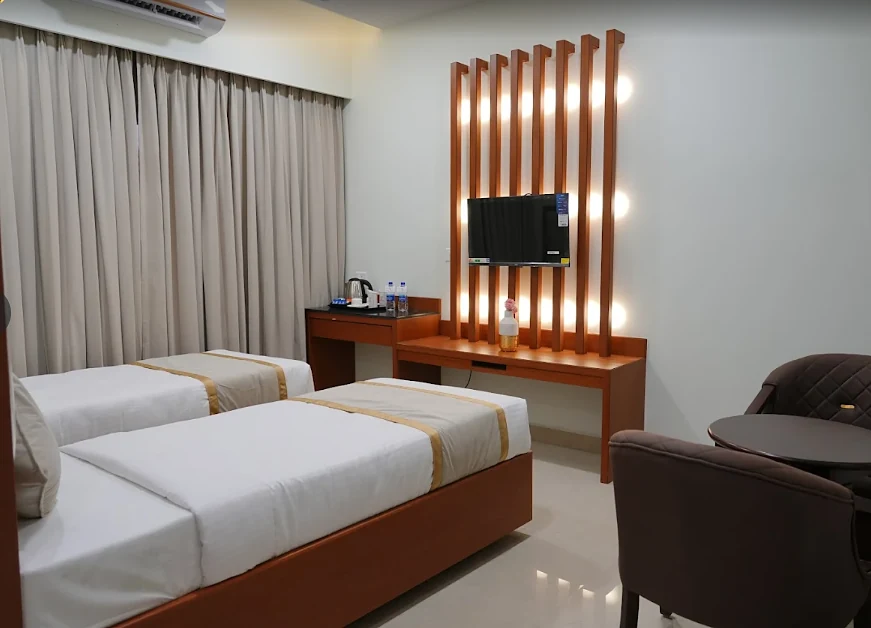
Some categories involve a longer interview day, extra documents or family members applying together, so it helps to be close to the consulate. Embassy Park is on Anna Salai in Thousand Lights, a few minutes from the US Consulate General. Rooms for two start at Rs 2,800 per night, and a triple room for a small family is Rs 3,500 or Rs 3,800.
Every room has a work desk, free Wi-Fi and a flat-screen TV, which is useful for last-minute checks of your documents. Rates should be reconfirmed when you book.
What other categories might you come across?
The State Department's category list includes several others. J-1 is the exchange visitor visa for cultural and educational exchange programmes, including professors, teachers and au pairs, and it also requires registration in the SEVIS system. O-1 is for people with extraordinary ability in the sciences, arts, education, business or athletics, and P-1 is for performing athletes, artists and entertainers. E-2 is for treaty traders and treaty investors.
K-1 is the fiance or fiancee visa and sits with the immigrant categories, because it relates to permanent settlement. Immigrant visas follow a different process from the nonimmigrant visas discussed above, so read the relevant official pages rather than assuming the same steps apply.
Before you book anything, identify your category from the official list and read its page, then confirm the document list with your sponsor if you have one. Fees differ between categories, so check the current fee for yours on the State Department site. Then look at the practical side: dates, who will travel with you, and where you will stay in Chennai for the appointment. A short, calm stay close to the consulate keeps the day simple. To book, call or WhatsApp +91 72007 60076 with your dates and number of guests, and ask the team to reconfirm the current rate and any taxes before you travel.
Quick questions
Is B-1/B-2 a work visa?
No. It is for temporary business visits or tourism. It does not allow you to take up employment in the United States.
Can I apply for an F-1 visa before getting an I-20?
No. You must be accepted by an approved school, which enrols you in SEVIS and issues the I-20 first.
Who starts the H-1B process?
Your employer, who files a petition with USCIS. You apply for the visa after it is approved.
Does a visa guarantee entry into the US?
No. The State Department says border officials make the final admission decision when you arrive.